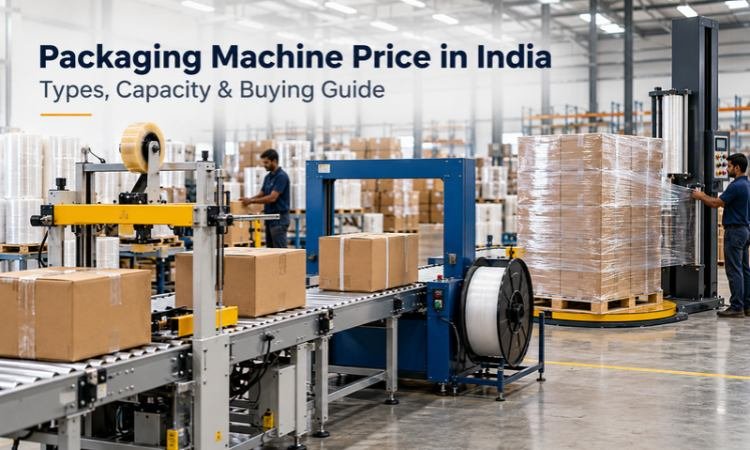
Choosing the right packaging machine can help businesses improve productivity, reduce manual work, and protect products during storage and transportation. However, the packaging machine price in India varies depending on the machine type, automation level, production capacity, and packaging requirements. From affordable manual tools for small businesses to fully automatic systems for large manufacturing units, there are several options available for different budgets and production needs. Before investing in a packaging machine, it is important to understand the available types, operating costs, and long-term benefits. This guide explains the estimated prices, key cost factors, and practical considerations to help you choose a machine that suits your business requirements. What Is a Packaging Machine? A packaging machine is a device that wraps, seals, and straps boxed products quickly and safely. Instead of relying on expensive and slow manual labor, these machines can automate the final setup for the production line. They can ensure the goods are protected from moisture, dust, and damage during transport while giving them the products for a clean and professional look. Packaging Machine Price in India – Quick Overview The cost of a packaging machine depends on its automation level, production speed, construction quality, and intended application. The following table provides indicative price ranges for different machine categories in India. Machine Type Best For Estimated Price Range (INR) Manual Tools Small businesses and low-volume packaging ₹15,000 to ₹35,000 Semi-Automatic Small and medium-sized businesses ₹45,000 to ₹1,50,000 Fully Automatic High-volume factories, FMCG, and e-commerce operations ₹1,50,000 to ₹5,00,000+ Note: These are indicative estimates, not verified live quotations. Actual prices may vary by machine type, specifications, brand, customization, and installation requirements. Specialized industrial systems may cost more. Types of Packaging Machines Different products require different packaging methods. Understanding the main machine types can help you identify the most suitable option for your operations. Stretch Wrapping Machines Stretch wrapping machines use stretch film to secure products or palletized loads. They help stabilize goods, minimize shifting during transportation, and protect products from dust and handling damage. These machines are commonly used in warehouses, manufacturing facilities, and logistics operations. Shrink Wrapping Machines Shrink wrapping machines use heat to shrink a plastic film tightly around products. They are suitable for bundling bottles, cosmetics, consumer goods, and retail products. Depending on the system, shrink wrapping can improve product presentation and provide a protective outer layer. Strapping Machines Strapping machines secure cartons, bundles, and heavy loads using plastic straps, commonly polypropylene (PP) or polyester (PET), or steel strapping where the application requires it. They are widely used for packaging boxes, industrial materials, appliances, and palletized goods. Carton Forming & Sealing Machines Carton forming and sealing machines help fold cardboard into boxes and seal cartons using tape or other suitable methods. Depending on the configuration, these machines can reduce manual work and improve packaging consistency for e-commerce, manufacturing, and distribution businesses. Pallet Wrapping Machines Pallet wrapping machines secure goods arranged on pallets using stretch film. Common configurations include turntable and rotary-arm systems. The right option depends on load weight, pallet dimensions, production volume, and available floor space. Manual vs. Semi-Automatic vs. Fully Automatic The level of automation is one of the main factors affecting machine cost. Each option offers different advantages depending on production volume, labour availability, and packaging requirements. Manual: The operator performs most packaging tasks using tools such as handheld stretch wrappers or manual strapping tools. These options generally suit businesses with low packaging volumes and limited budgets. Semi-Automatic: The operator positions the product or strap, while the machine performs specific tasks such as tensioning, sealing, or wrapping. This option can improve productivity without requiring a fully automated production line. Fully Automatic: The machine performs most packaging operations with minimal manual intervention. Depending on the setup, conveyors and automated controls can handle product movement, wrapping, sealing, or strapping. These systems are generally suitable for high-volume operations. Packaging Machine Capacity & Speed Capacity directly affects the price. A machine that processes 10 boxes per minute may use simpler and more affordable components. A machine designed to handle 40 or more boxes per minute may require premium motors, heavy-duty frames, and advanced sensors. Always match your machine’s capacity to your daily production volume. This helps avoid bottlenecks without spending unnecessarily on higher speeds. What Factors Affect Packaging Machine Price? Automation Level: Fully automatic systems generally cost significantly more than semi-automatic machines. Build Quality: Machines with stainless steel frames or imported motors may last longer but can cost considerably more than basic mild-steel models. Customisation: Special wrapping patterns, unique product sizes, and conveyor belt integration can increase costs. A reliable supplier with local service engineers and warranty coverage may charge a higher price, but this support can help prevent costly downtime. How to Choose the Right Packaging Machine Do not buy a random option. Follow the simple checklist: Measure the Product: Note the exact dimensions and weight along with the shape of your load. Calculate the daily volume: Exactly how many pallets or units can you process for each shift? Check the Space: Do ensure that you have enough space plus the correct power supply (three-phase or single-phase). Ask For a Demo: Do test the machine for the actual products plus packaging materials before you buy. Verify Support: Do ensure that suppliers provide the installation, quick support, and training, along with spare parts delivery for your city. ROI & Payback: When Should You Automate? Many businesses are concerned about the initial investment, but calculating the packaging machine ROI can help estimate potential cost savings and how long it may take to recover the investment. For example, suppose a semi-automatic strapping machine costs ₹1,00,000 and saves ₹15,000 per month in labour costs. If it also reduces film waste by approximately ₹5,000 per month, the total monthly savings would be around ₹20,000. At that rate, the machine would pay for itself in approximately five months. If you process more than 50 to 100 units daily, automation may be worth considering. However, the actual return on investment depends on