Ludhiana is known as one of India’s strongest manufacturing cities, where goods such as textiles, bicycle parts, engineering products, and FMCG items are manufactured. Factories in Ludhiana run at a fast pace every day, and as manufacturing production increases, packaging of these goods is becoming a serious challenge for manufacturing industries.
Manual packaging methods are a very slow process and are heavily dependent on workers. Because of this, they frequently create delays in delivery. To tackle this problem, many factories are now looking at packaging automation solutions in Ludhiana.
In today’s competitive market, automation is not a luxury; it is becoming a practical need for manufacturers who want consistent output and smooth production. This blog provides complete information about packaging automation.
What Is Packaging Automation?
Covering manufactured goods with a protective cover using machines is known as packaging automation. In this method of packaging, machines are used instead of labour for packing products. In manual packaging, workers pack, seal, label, and stack products by hand, and in this process, the chances of making mistakes increase.
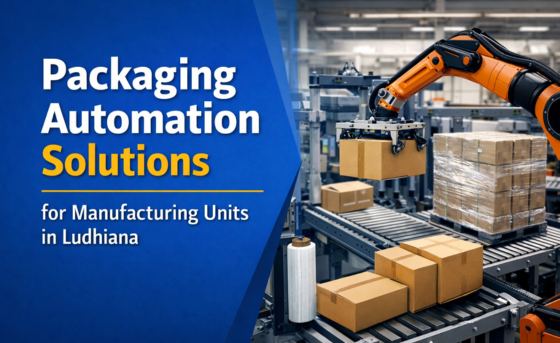
Automated packaging uses machines to handle these tasks. These machines can fill, wrap, seal, strap, label, and palletize products with consistent speed and quality. In modern factories, industrial packaging machines work as part of the production line, reducing human effort and helping factories deliver products on time.
Packaging automation also plays an important role in timely delivery. When packaging is automated, production increases and becomes easier to control.
Packaging Challenges Faced by Manufacturing Units
Manufacturing industries regularly face packaging problems because they mostly depend on labour. It is very hard to find skilled packaging labour, and it is expensive to sustain them. Due to regular labour absence, production output can be affected, which delays dispatching goods on time.
Inconsistent output is another big challenge in packaging because manual packaging totally depends on workers’ skills and energy levels. Due to this, uneven packaging, damaged products, and regular customer complaints about loose packaging occur.
There are always delays in dispatching goods because packaging is slow, even when production speed is high. As a result, manufactured products get accumulated near dispatch areas, causing space shortages and safety issues.
These challenges push manufacturers to think seriously about factory automation packaging solutions.
Types of Packaging Automation Systems
Secondary Packaging Automation
In this system, products that are already in primary packaging are packed into boxes, followed by box sealing and labeling. Automation of this packaging process improves consistency and minimizes repetitive work.
End-of-Line Systems
End-of-line packaging systems are installed at the final stage of production. These systems include stretch wrappers, strapping machines, case packers, and palletizers. They prepare goods for storage and dispatch and are critical for factories with high delivery volumes.
Integrated Wrapping and Strapping
Integrated wrapping and strapping systems secure products during transportation and save a lot of time and space.
These systems are commonly used in textile and engineering units in Ludhiana.
Benefits of Packaging Automation for Ludhiana Manufacturers
Packaging automation increases productivity, as machines work continuously without fatigue. Manufacturers achieve higher output using the same resources, while also saving time.
Automated packaging machines provide consistent productivity. They reduce product damage, minimize incorrect labeling, and lower packaging defects.
Packaging automation also offers scalability. When market demand increases, automated systems allow manufacturers to increase output without adding large labour teams. This helps industries meet sudden market demand efficiently.
In the long run, packaging automation solutions in Ludhiana help factories remain competitive and reliable.
Industries in Ludhiana Adopting Automation
In Ludhiana, industries are gradually adopting packaging automation. Textile industries are starting to use automated wrapping and strapping to manage textile materials and garments safely.
Fast-moving consumer goods facilities rely on automated packaging for speed and hygiene, as consistent packaging is essential for maintaining brand image in this sector.
Manufacturing industries producing engineering goods use heavy-duty industrial packaging machines to pack metal parts, tools, and large machine components for secure transportation.
Across these sectors, automation is becoming a standard practice rather than an experiment.
How Dipack Helps with Packaging Automation
Dipack works closely with manufacturing units to design practical automation solutions. It focuses on understanding the factory’s real problems instead of selling machines blindly.
The solution design approach begins with studying production flow, packaging volume, and space constraints. Based on this analysis, suitable automation systems are recommended.
Dipack also provides support across Punjab and NCR, including installation, training, and after-sales service. Local support is important because packaging systems are critical for daily operations.
For more details, manufacturers can explore the internal resource on packaging automation services and review the guide on end-of-line packaging systems to understand system options better.
Factors to Consider Before Automating Packaging
Production volume is very important when automating packaging, as automation works best when output is stable or growing. Very low-volume units do not show immediate returns.
Factory layout should also be considered. Space availability and material flow affect machine selection and placement.
Future expansion must be planned in advance. Automation systems should allow upgrades as production grows, helping avoid costly changes later.
Making informed decisions ensures that automation delivers real value.
Conclusion
Packaging automation is no longer optional for manufacturing units in Ludhiana. Rising labour challenges, quality demands, and delivery pressure make automation a smart move. By using automated packaging methods, factories can improve productivity, reduce errors, and prepare for future growth.
Companies like Dipack help manufacturers build efficient, future-ready packaging systems that support business growth and provide long-term operational stability.