
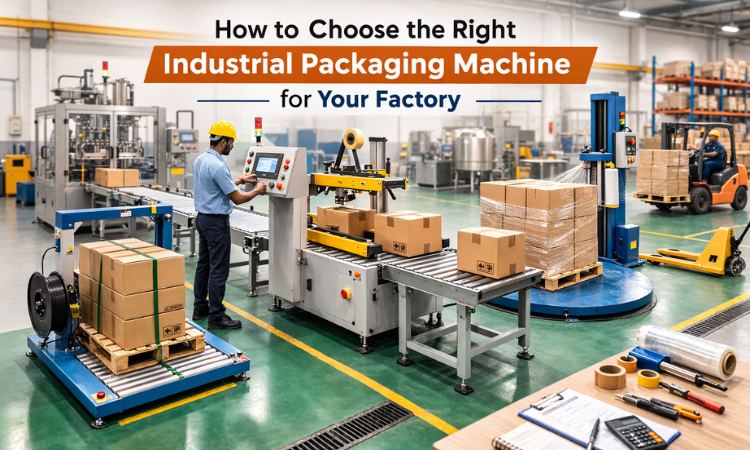
Your packaging line is a lot more than spending money; this is actually a super silent salesperson and also the very first line of defense. An incorrect industrial packaging machine can easily drain profits with wasted materials, production bottlenecks, and even worse, damaged goods. Multiple factories make these types of costly mistakes: buying those cheap machines that have a high rate of frequent breakdowns, choosing systems that can easily handle humidity, or also sometimes overinvesting towards automation for small batches. This guide is designed to cut through all the useless noise with the best and most factory-floor-focused approach for the selection of the right packaging equipment that can easily work for your business and not someone else’s brochure.
Understanding Your Factory’s Packaging Requirements
Type of Product You Manufacture
The physical nature of your products dictates a lot in this case. Fragile electronics require gentle carton sealers that have adjustable tension, whereas the steel coils demand actual heavy-duty industrial packaging solutions with 500+ packaging capacity. Liquids require leakproof sealing systems, and powders that need dust-tight enclosures, along with the enclosures, call for stretch-wrapping flexibility. Ignoring the mismatch can cause around 68% of the packaging failures; we have seen multiple snack factories that use shrink wrappers meant for bottles, thus crushing their products daily.
Packaging Format & Material Used
Matching these machines to the actual packaging materials:
- Corrugated Cartons? : The case erectors that have adjustable width settings.
- Palletized Goods? : Stretch wrapping machines that film with pre-stretch.
- Bottle/Cans: Shrunk tunnels that are compatible with POF film.
- Bulk Sacks: Automatic strapping systems that are woven for PP bags
Using the compatible materials (for instance, cheap PVC for high-humidity factories) that cause 30% more jams and waste.
Daily Production Volume & Speed Needs
Just do not guess but measure:
- <50 units/hour: Semi-automatic machines can suffice (for instance, tabletop strappers).
- From 50 to 200 units per hour: Mid-sized automatic systems (for instance, L-Sealers)
- 200+ Units Per Hour: For fully integrated lines for the conveyor sync.
Pro tip: Add 25% of the buffer capacity. A Pune-based spice exporter that learned this the hard way when Diwali orders overwhelmed their “perfectly sized” shrink wrapper.
How to Choose the Right Industrial Packaging Machine
Match Machine Capacity with Factory Output
The ₹25 Lakhs speed strapping machine can be useless if you can run for around 8 straps per minute. Calculate the (Units per shift) ÷ (Shift hours) = Required speed.
For instance: 1,200 cartons per 8-hour shift = 150 Cartons per hour, thus needing a sealer handling for ≥2.5 cartons/minute.
Focus on Long-Term Efficiency, Not Just Price
At ₹4 Lakhs, a semi-auto strapper seems cheaper than around ₹10 Lakhs for automatic systems, as you calculate:
- Labor: Manual strapping needs 2 operators. For ₹40,000/month vs. 1 for the auto systems (₹20,000).
- Waste: Auto systems that use 30% less strap film.
- Downtime: Cheaper machines can break easily for 3X more time and cost around ₹18000 per hour for halted productions.
Consider Scalability for Future Growth
Choose those modular machines:
- Expandable turntables that can add film carriages later.
- PLC-controlled systems towards accepting new sensors through software updates.
- Conveyor-ready designs: For the future line integration
A textile mill in Coimbatore saved around ₹6 Lakhs by upgrading their industrial packaging machine instead of replacing it when volumes doubled.
Different Types of Industrial Packaging Machines Explained
There are the best industrial packaging solutions that can transform your packaging needs.
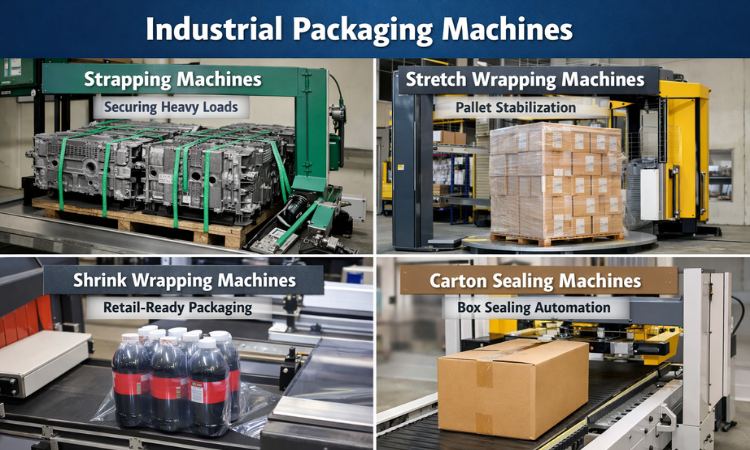
Strapping Machines
Best For: Securing irregular or heavy loads (appliances, lumber, and steel).
Indian Use Case: An auto part supplier in Ahmedabad used PET strapping machines for bundling of engine blocks.
Major Tip: For those damp or monsoon places, specify the stainless steel tensioners for preventing rust jams.
Stretch Wrapping Machines
Great for pallet stabilization for logistics.
Indian Use Case: E-commerce fulfillment centers can wrap around 40+ SKU pallets every hour with the rotating-arm packaging machines in India.
Major Tip: For dusty factories, use the right industrial packaging machine that’s IP-54 rated.
Shrink Wrapping Machines
Great for: Retail-ready packaging (cosmetics, beverages)
Indian Use Case: With the use of L-bar sealers, FMCG can easily seal 6-pack beverages, thus achieving around 98% tamper-proof seals for compliance in supermarkets and hypermarkets.
Major Tip: For different power fluctuations, add voltage stabilizers for the heat tunnels.
Carton Sealing & Forming Machines
Great for: Uniform box sealing for e-commerce/pharma
Indian Use Case: A Delhi-based supplement maker reduced the sealing errors from around 12% to around 0.5% after installing the automatic case detectors.
Major Tip: Choose quick-charge parts for handling sudden SKU switches.
Choosing the Right Automation Level
Type | Best For | Speed | Labor Needed | Price (India) |
Manual | <50 units per day | 5 to 10 units/min | 2 operators | ₹1 to ₹3 lakhs |
Semi-Automatic | 50-200 units per day | 10 to 25 units/min | 1 operator | ₹3 to ₹8 lakhs |
Fully Automatic | 200+ units per day | 25 to 60 units/min | 0.5 operator | ₹8 to ₹25+ lakhs |
Indian Reality: Fully automatic packaging machines in India can save up to ₹1.2 lakhs per month in labor and film costs, but they require stable power and skilled maintenance.
Machine Quality, Build & Compliance Standards
Build Quality for Indian Conditions
Motors rated for high temperatures (45°C+)
IP54+ dust-protected enclosures
Voltage tolerance between 180V–240V
These features ensure reliable performance across different regions.
Safety & Compliance
BIS certification for electrical safety
CE marking for export-oriented businesses
Emergency stop buttons within easy operator reach
Safety compliance is non-negotiable when investing in packaging machines in India.
After-Sales Support & Service Availability
Installation & Operator Training
On-site installation by factory-trained engineers
Operator training in local language
30-day performance guarantee
Spare Parts & Service Support
Keep critical spares in stock
Ensure technician availability within 24 hours
AMC contracts covering wear and tear
Reliable service is part of total industrial packaging solutions.
Cost vs Value: Calculating ROI
The Real Cost Equation
Total Cost = (Machine Price) + (Labor × 12 months) + (Film/Waste × 12 months) + (Downtime Losses)
Basic calculation for a ₹10-lakh stretch wrapper:
- Labor Savings: ₹40,000 per month × 12 = ₹4.8L
- Film Savings: 35% of Less Usage = ₹2.1L/year
- Downtime reduction: 15 fewer hours/month × ₹18k/hr = ₹3.24L
Complete annual savings: ₹10.14L → ROI in 11.8 months
Costly Mistakes to Avoid
- “Cheap” machines: A ₹5 lakh strapper does need weekly repair costs more after 3 years than a ₹10 to ₹12 lakh reliable machine.
- Ignoring Film Costs: Machines that have around 200% pre-stretch use 50% less film than the basic models.
Why Choosing the Right Industrial Packaging Machine Manufacturer Matters
Buying an industrial packaging machine is a big investment. But choosing the right manufacturer is just as important as choosing the machine itself. A good machine with poor service can cause delays, breakdowns, and extra costs.
Always select a manufacturer who has real experience and has installed packaging machines in India across different industries. They should understand factory conditions like heat, dust, and power fluctuations. Quick service support and easily available spare parts are very important to avoid long production stops.
A reliable company does not just sell a machine — they provide complete industrial packaging solutions, including installation, operator training, and maintenance support.
In simple words, choose a manufacturer who supports you even after the sale. That is how your packaging machine for factory use will run smoothly and give better returns for years.
Final Checklist Before Buying
- Product Tested: The machine wrapped your items in a successful manner.
- Space Verified: Fits the allocated footprint (with around 1M safety clearance)
- Power Confirmed: Matches the factory voltage/current specifications
- ROI calculated: Payback period more than 18 months.
- Service Guaranteed: Below 24-hour service as in response time in your area.
Conclusion: Make a Smart Packaging Investment
The right packaging machine is not about some fancy features; this is about solving your headaches. Whether you’re a small textile unit in Lucknow or a major auto parts supplier in Tamil Nadu, always prioritize reliability, real-world ROI, and local support over just some brochure specifications. Contact us for a factory assessment totally free of cost, and we will show you exactly which type of machine saves time for your exact operations. Get the right industrial packaging machine, and each perfect shipment is your profit earned.