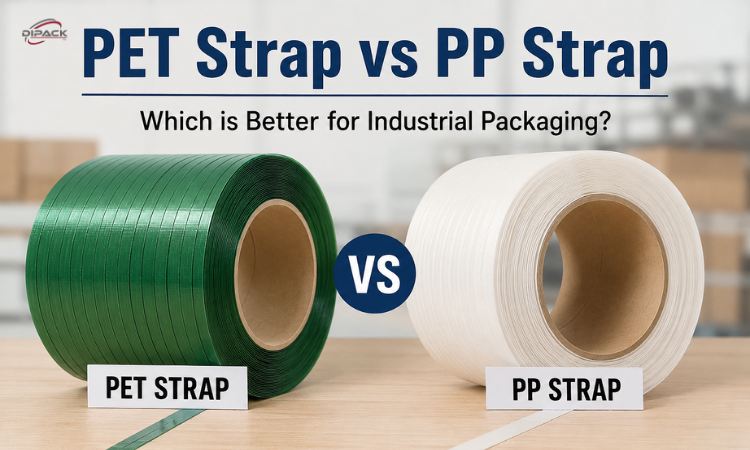
When it comes to securing pallets, cartons, steel coils, or any bulky shipment, the right strapping material can save manufacturers thousands of rupees in damaged goods, re-strapping costs, and transit claims. The two most widely used plastic strapping options in Indian industries today are PET (Polyester) Strap and PP (Polypropylene) Strap. But here is the real question every manufacturer, factory owner, and packaging head asks — PET Strap vs PP Strap: which one is actually better for industrial packaging? The honest answer is, it depends on your load weight, transit distance, storage conditions, and budget. In this guide, we will break down both materials in simple language so you can make a confident, cost-effective decision for your packaging line. What is PP Strap? PP Strap, short for Polypropylene Strap, is a lightweight thermoplastic strapping material made from polypropylene resin. It is the most common strapping band used across e-commerce, FMCG, food packaging, courier services, and light manufacturing. PP straps are flexible, easy to handle, and available in a range of widths (typically 6mm to 19mm). They come in multiple colours, which helps companies colour-code shipments or match their brand identity. Key features of PP Strap: Light to medium-duty load handling High elongation and flexibility Affordable per-roll pricing Works with both manual hand tools and semi/fully automatic strapping machines Suitable for indoor storage and short-distance transport PP strap is the budget-friendly workhorse of Indian packaging lines, especially in carton bundling and box-level strapping operations. What is PET Strap? PET Strap, also called Polyester Strap, is a high-tensile strapping material manufactured from polyethylene terephthalate — the same family of resin used in PET bottles. It has a denser molecular structure than PP, which gives it much higher rigidity, strength, and tension retention. PET straps are widely considered the best plastic alternative to steel strapping. They hold heavy loads securely without losing tension over long transit periods, making them ideal for export shipments, heavy industrial loads, and outdoor storage. Key features of PET Strap: High tensile strength (often replaces steel strapping) Excellent tension retention over weeks and months Strong UV, moisture, and temperature resistance Available in widths from 9mm up to 32mm for heavy-duty needs Safer than steel — no sharp edges, no rusting, no operator injuries PET strap is the preferred choice for steel coils, bricks, timber, automotive parts, aluminium sections, and any palletised heavy load that must survive long journeys. PET Strap vs PP Strap: Quick Comparison Table Here is a side-by-side look at how both materials stack up. This is the fastest way to understand the difference at a glance. Feature PP Strap (Polypropylene) PET Strap (Polyester) Tensile Strength Low to Medium High (steel-replacement grade) Best For Light to medium loads Medium to heavy loads Elongation High (more stretchy) Low (rigid hold) Tension Retention Loses tension over time Holds tension for long periods UV Resistance Low High Temperature Resistance Moderate Excellent (up to 200°C) Cost per Roll Lower Higher Common Width 6mm – 19mm 9mm – 32mm Ideal Storage Indoor, short-term Indoor and outdoor, long-term Eco-Friendly Recyclable Highly recyclable (often from PET bottles) Best Industries E-commerce, FMCG, courier, food Steel, automotive, construction, exports Strength and Tensile Capacity This is the single biggest reason manufacturers compare these two materials in the first place. PP Strap typically offers a break strength suitable for cartons, light cases, and parcels under 40–50 kg. It stretches more, which means it can absorb minor shocks during handling, but it cannot hold heavy or rigid loads tightly for long. PET Strap, on the other hand, can secure loads exceeding 600 kg in many specifications. Its low elongation means once it is tensioned, it stays tensioned. For heavy palletised goods, bricks, marble slabs, steel rolls, or machinery parts, PET is the only plastic option that comes close to steel strapping performance. Real-world takeaway: If your shipment shifts, settles, or compresses during transit, PET will recover and continue to hold. PP simply cannot. Cost and Long-Term Value On the surface, PP strap looks like the cheaper option — and per metre, it is. But experienced procurement managers know that strapping cost is not just about the price of one roll. It is about the total cost of ownership. Here is what really impacts your packaging budget: Re-strapping cost: PP straps that lose tension during transit often need re-strapping at warehouses or distribution centres. That is extra labour, extra time, and extra material. Damage claims: Loose loads cause product damage. According to global cargo bodies, nearly 65% of cargo damage claims come from poor packaging practices. Labour and machine time: A strap that breaks during application interrupts your packaging line. For light loads, PP gives excellent value. For heavy, high-value, or long-distance shipments, PET pays for itself many times over by preventing claims and rework. The wise approach for most factories is to stock both — PP for inner cartons and PET for final pallets Weather, UV and Temperature Resistance Indian conditions are tough on packaging. Goods may sit at a port in Mumbai under the sun, then travel through humid coastal routes, then end up in cold-chain warehouses or international containers. Strapping material has to survive all of this. PP Strap has moderate resistance. Long sun exposure weakens it, and it loses tension faster in heat. It is best used indoors or for short-cycle dispatches. PET Strap is built for the outdoors. It resists UV light, holds up in extreme heat and cold, and does not degrade in humidity. This is why exporters, construction suppliers, and outdoor-storage industries almost always specify PET. If your goods stay strapped for more than a few days, or if they are exposed to sun or weather at any stage, PET is the safer choice. Application and Industry Use The clearest way to settle the PP vs PET question is to match the strap to the industry. Here is how Indian manufacturers typically choose: Choose PP Strap if you are in: E-commerce and parcel courier services FMCG, food, beverages, and confectionery Paper,
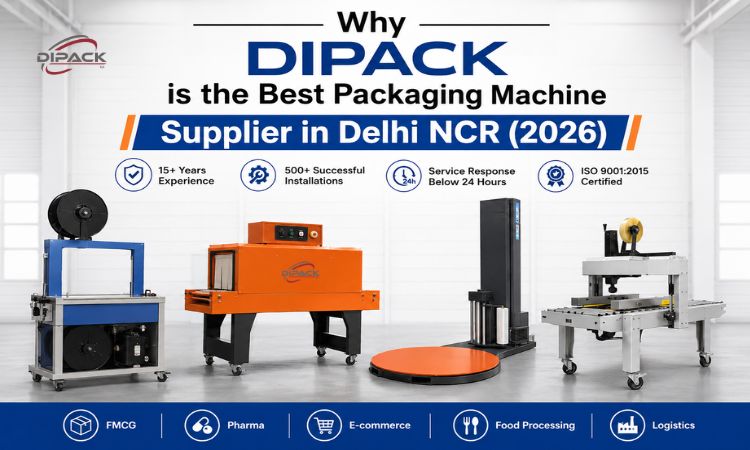
Why Dipack is the Best Packaging Machine Supplier in Delhi NCR (2026)
India’s packaging industry is growing rapidly with the expansion of FMCG, e-commerce, pharmaceuticals, logistics, and manufacturing sectors. As businesses scale operations, the demand for reliable and efficient packaging machines is increasing across Delhi NCR and other industrial regions. However, many companies still struggle with delayed installations, poor after-sales support, and low-quality machines that affect production efficiency. Choosing the right packaging machine supplier is no longer just about pricing — it is about long-term performance, service reliability, and operational support. This is where Dipack has built a strong reputation. With years of industry experience, quality-certified machines, and fast service support across Delhi NCR, Dipack has become a trusted choice for businesses looking for dependable packaging solutions. Packaging Industry in India – Why Demand for Machines is Growing Fast E-commerce, FMCG fulfillment centers, and pharma centers are scaling faster than ever. With the rising orders volume plus strict delivery deadlines, manual packaging is no longer sustainable. Factories that are upgrading automated systems for cutting in costs, reducing errors, cutting labor costs, and ensuring that the product is safe for transit. A wrong choice means wasted materials and costly downtimes. The great partner can deliver reliability, speed, plus long-term value. What Makes a Packaging Machine Supplier “Best”? “Best” is not just a claim; this is measured for clear standards. Firstly, the product quality, that is, the machines that are built for 24X7 operations, not just the showroom specs. Second, the machine: one supplier that can cover strapping, wrapping, and sealing, so you do not just juggle the multiple vendors. Thirdly, the after-sales service: quick response guaranteed spare parts and local engineers; these factors are non-negotiable. Fourth, the pricing strategy; no training fees or hidden installation. Finally, the experience counts; a supplier for the proven installation understands those real factory challenges, not just the theoretical specs. These criteria can separate the temporary vendors from those long-term partners. Dipack vs Other Packaging Machine Suppliers in Delhi NCR Feature Dipack Typical Suppliers Industry Experience 15+ Years Limited Experience Installations 500+ Successful Installations Often Limited Service Support Fast NCR Support Delayed Response Customization Available Limited Spare Parts Availability Local Stock Available Delayed Imports Pricing Transparency Clear & Competitive Hidden Charges Common Training Support Included Sometimes Extra Dipack – Trusted Packaging Machine Supplier in Delhi NCR Since 2012, Dipack has been helping businesses improve packaging efficiency with reliable and high-performance machines. The company serves clients across Delhi, Noida, Ghaziabad, Gurugram, Faridabad, and Greater Noida. Dipack is ISO 9001:2015 certified, and every machine undergoes proper quality checks before delivery. The company provides installation support, operator training, and after-sales service to ensure smooth machine operation. Over the years, Dipack has supplied packaging machines to businesses in: FMCG Pharmaceuticals Logistics Warehousing Food Processing Manufacturing The company focuses on delivering practical packaging solutions that improve productivity and reduce operational challenges. Packaging Machines Offered by Dipack Strapping Machine Strapping machines are widely used for securing cartons, pallets, and industrial products using PET or steel straps. These machines are ideal for: Textile industries Auto parts Warehouses Logistics operations Benefits include: Better load stability Reduced transit damage Faster packaging process Shrink Wrapping Machine Shrink wrapping machines use heat-shrink film to create secure and professional packaging. These machines are commonly used for: FMCG products Retail packaging Multipacks Export cartons Benefits include: Tamper-proof packaging Attractive product presentation Improved product protection Stretch Wrapping Machine Stretch wrapping machines are used for wrapping pallets with stretch film to keep products stable during transportation. Suitable for: Warehouses Distribution centers Manufacturing units Benefits: Reduced film usage Improved pallet stability Faster packaging speed Carton Sealing Machine Carton sealing machines automatically seal boxes with adhesive tape, improving packaging consistency and speed. Ideal for: E-commerce businesses Logistics companies Packaging units Benefits: Reduced manual labor Faster carton sealing Uniform packaging quality Packaging Machine Price in Delhi NCR The price of a packaging machine depends on the type of machine, automation level, production capacity, and customization requirements. For example, semi-automatic machines are generally priced differently from fully automatic systems. Machine prices may also vary over time due to changes in technology, features, and market conditions. That’s why choosing the right machine based on your business needs is more important than focusing only on price. At Dipack, we help businesses find the most suitable packaging solution according to their operations and budget. Need Latest Pricing or Machine Consultation? Contact Dipack today for the latest machine prices, expert guidance, and customized packaging solutions. Need Latest Pricing or Machine Consultation? Get expert guidance for choosing the right packaging machine for your business needs. Our team will help you with the latest pricing, machine recommendations, and customized packaging solutions. Talk to Packaging Expert Why Businesses Prefer Dipack (Real Benefits) We sell more than machines; we actually solve operational headaches. Faster and quicker services mean lower downtimes when the lines stop. The durable machines actually mean long-term savings plus a lower repair process when you go for the packaging machine price in India. When you choose Dipack, you have complete peace of mind, an efficient machine that can run smoothly and respond in an instant manner. These are the best packaging machines Delhi and NCR-wise, and provide the best ROI that can be shown in your balance sheet. Industries Served by Dipack Dipack has not become the best packaging machine supplier in Delhi NCR and across India, as we serve almost all industries that need packaging at a precise and fast pace: The FMCG brands use our shrink wrapper machines for retail building. The pharma companies rely on our advanced sterile carton sealers for those compliance-ready dispatches. E-commerce warehouses can deploy the stretch wrappers for securing high-speed pallets. Food processing units that trust the food-grade strapping systems for expert-ready and safe packaging. Dipack can tailor each solution to industry-specific standards. Contact Dipack for Packaging Machine Solutions If you are looking for a reliable packaging machine supplier in Delhi NCR, Dipack offers practical and efficient solutions for businesses of all sizes. From strapping and shrink wrapping to carton sealing and stretch wrapping
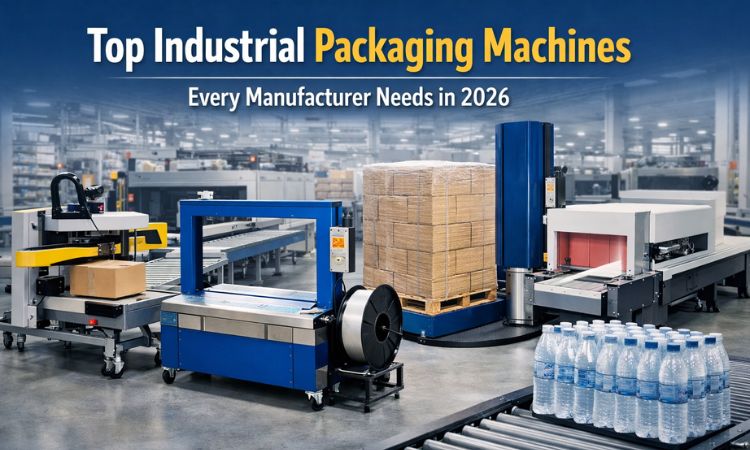
Top Industrial Packaging Machines Every Manufacturer Needs in 2026
Manufacturing today isn’t completely limited by the capacity of production. Actually, it’s often slowed down by inefficient packaging processes that influence speed, cost, and overall packaging efficiency. Numerous factors still depend on manual or sometimes semi-automated systems, and create delays and inconsistencies in daily operations. In 2026, it will become essential to adapt industrial packaging machines for improving production line automation and keeping up with modern smart manufacturing demands. The right packaging machines for manufacturers not just streamline operations but it also reduce errors and improve overall output. In this blog, we’ll explore the most crucial packaging machines every manufacturer should consider, along with key packaging automation benefits and how exactly they solve real-world production challenges. Why Packaging Automation Is Important for Manufacturers in 2026? Packaging automation is no longer a luxury. Beyond that, it has become necessary for manufacturers who want to be competitive in today’s industrial environment. Here are some key reasons why automated packaging systems are becoming essential: Faster Production Speed The industrial packaging machines can pack hundreds and even thousands of items in an hour and greatly enhance production efficiency. Reduced Labor Costs Automated packaging systems save manpower and assist manufacturers in minimizing their operational costs. Consistent Packaging Quality These machines will guarantee consistency in packaging, which enhances brand image and minimizes packaging mistakes. Improved Product Safety The packaging machines of today seal and wrap products and they also protect them throughout storage and transportation. Higher Productivity When you automate the process of packaging, you can focus on improving other aspects of production and growth of your business. Thanks to such advantages, the packaging automation is one of the most significant investments in modern factories and warehouses. Top Industrial Packaging Machines Every Manufacturer Needs In order to optimize operations, manufacturers must invest in the right equipment. Here are the most important industrial packaging machines that are used in modern manufacturing facilities: 1. Carton Sealing Machine One of the most popular types of packaging machines in the manufacturing and logistics sector is a carton sealing machine. The cartons are sealed by using adhesive tape or adhesive, done automatically by the machine, which guarantees secure packaging and saves labor. Key Benefits Quickly seal boxes. Consistent packaging quality Reduced manual labor Perfect in warehouses/e-commerce packaging. Carton sealing machines are widely used in industries like electronics, consumer goods, pharmaceuticals, as well as logistics. 2. Strapping Machine A strapping machine is applied for attaching cartons, packages or even pallets using plastic or steel straps. This now guarantees that packages are stable when being handled and transported. Strapping machines are necessary in industries where large or heavy packaging is done. Key Benefits Improves package stability Protects against damage during transportation. Increases packaging efficiency Appropriate with heavy packages and pallets. The majority of the manufacturers are more attracted to automatic strapping machines because they are able to handle high volumes of packaging with minimal manual handling. 3. Stretch Wrapping Machine In many factories, pallet packaging is done through the use of a stretch wrapping machine. It covers the pallets with stretch film to stabilize the goods, protect against dust, moisture and damage. It is especially applicable in the logistics, warehouses, as well as manufacturing plans where there are huge numbers of products to be transported. Key Benefits Protects products during shipping Lessens the use of packaging materials. Improves pallet stability Enhances warehouse efficiency The stretch wrapping machines have become an important component of the modern pallet packaging system. 4. Shrink Wrapping Machine A shrink wrapping machine is a machine that uses heat to tightly wrap plastic film around products. This produces safe and professional packaging. Shrink wrapping is mostly applied in packaging products, retail packaging, and food packaging. Key Benefits Professional and attractive packaging. Dust and moisture resistance. Best in product bundling. Appropriate for foodstuffs, drinks, and consumer goods. Shrink wrapping machines allow the companies to enhance the protection of the products as well as their appearance 5. Conveyor Systems An automated packaging line is inseparable without having a conveyor system. It literally transfers goods amongst machines, minimizes the amount of manual effort, and enhances the workflow. A significant role is played by conveyor systems in high-volume manufacturing. Key Benefits Easy flow of products along the production line. Reduces manual labor Increases production speed Enhances the general factory performance. When we combine it with packaging machines, conveyor systems are used to develop a complete process of packaging that is automated. Get the Best Industrial Packaging Machines for Your Factory If you are looking to upgrade your packaging operations with advanced automation, explore high-quality packaging solutions from Dipack to improve efficiency and productivity in your manufacturing process. How to Choose the Right Packaging Machine for Your Factory Choosing the right packaging machine depends on various factors. Manufacturers should assess their production preferences before even investing in packaging equipment. Here are some of the crucial factors to be considered: 1. Production Volume High-volume production facilities need fully automated packaging systems just to maintain efficiency. 2. Type of Product Different products need different packaging methods, like wrapping, sealing, or sometimes strapping. 3. Available Space The size of the packaging machine must match the available factory space. 4. Automation Level You should always decide whether your manufacturing unit needs semi-automatic or fully automatic packaging machines. 5. Maintenance and Cost Choosing machines that require minimal maintenance helps reduce long-term operational costs. A packaging system that’s chosen thoughtfully can improve production efficiency, packaging quality, as well as operational profitability. Future Trends in Industrial Packaging (2026 and Beyond) The packaging industry is dynamically changing based on new technologies. The future of industrial packaging is likely to be influenced by various trends. Smart Packaging Automation Contemporary packaging machines are becoming smarter and are equipped with sensors and automation technologies. AI-Integrated Production Lines AI (Artificial Intelligence) is assisting factories in order to optimize their packaging and decrease the total down time. Sustainable Packaging Solutions Producers are also shifting towards the use of environmentally-friendly packaging materials and energy-efficient equipment. Energy-Efficient Machinery Designing
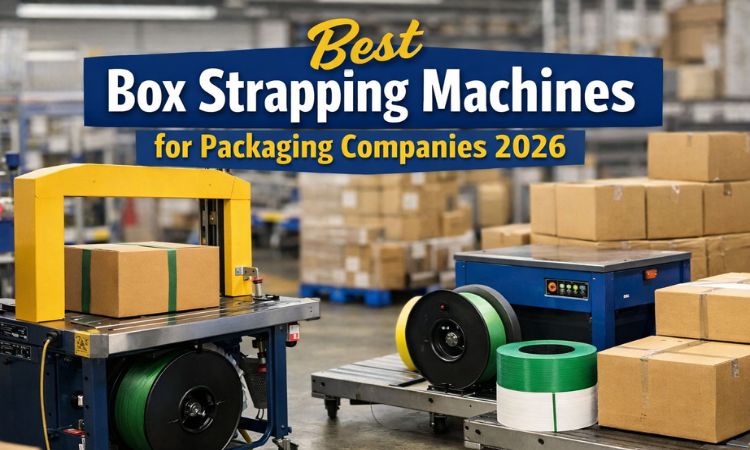
Best Box Strapping Machines for Packaging Companies (2026 Guide)
Nowadays, packaging companies handle thousands of cartons every day across manufacturing units, warehouses, and logistics hubs. The secure packaging process becomes essential in high-volume operations because it protects products during their journey to customers. Weak packaging materials leads to product loss and product returns while it drives up operational expenses. Manual strapping work requires extended time and uses additional workers while it generates packaging results that lack consistency for the finished products. Automated box strapping machines operate with enhanced speed and safety and deliver better cost performance than manual systems. It secures all cartons through a process which maintains constant tension throughout each package, thereby enabling efficient handling and transportation operations. Choosing an appropriate packaging strapping machine results in better work output and decreased expenses throughout the equipment’s operational life. Here, we will discuss the 2026 guide for the best box strapping machines in detail. What is a Box Strapping Machine? A box strapping machine is packaging equipment that secures cartons through the application of plastic straps, including PP (polypropylene) and PET (polyester). It operates in factories, warehouses, and logistics hubs to maintain package security during all phases of handling and transportation. A box strapping machine executes its tasks through four steps. The carton is placed on the machine, and the strap wraps around it. The machine uses its mechanism to tighten the strap until it establishes a firm grip on the carton. It uses heat to create a permanent bond, securing the strap after the tightening process. This method creates durable packaging that protects products from shipping damage during distribution. Why Packaging Companies Use Box Strapping Machines? Packaging companies use box strapping machines because they increase operational productivity while securing products for protection. Here are the reasons why packaging companies use box strapping machines: Faster Packaging Speed Box strapping machines can strap 20–60 cartons per minute which is much faster than manual work. Better Package Security In box strapping machines, the straps keep cartons tightly closed and prevent them from opening during transit. Lower Labour Cost Automation in a box strapping machine needs fewer workers so it cuts down on both the operational expenses and labor expenditures. Professional Packaging The machines produce tidy packaging that maintains brand consistency throughout each product package. Improved Logistics Handling Looking for reliable packaging machines for your factory or warehouse? Our experts at Dipack will help you choose the right solution. Looking for reliable packaging machines for your factory or warehouse? Our experts can help you choose the right solution. Get the Best Box Strapping Machine for Your Business Types of Box Strapping Machines Used in the Packaging Industry: The packaging industry uses various box strapping machine types which match their company production requirements and their automation system requirements. Here are different types of box strapping machines used in the packaging industry: Semi-Automatic Box Strapping Machine The operator needs to manually position and control the strap throughout the entire process of applying the strap to the carton. The machine then tightens and seals the strap automatically. A semi-automatic box strapping machine for warehouse serves as the perfect solution for small businesses and warehouses that need to handle their typical packaging requirements. It provides an affordable solution which businesses can easily operate without needing advanced automation to achieve high-speed operations. It delivers both cost-effective solutions and efficient performance. Fully Automatic Box Strapping Machine A fully automatic box strapping machine performs the entire process without manual intervention. It helps in carton sealing and strapping. The machine serves as the ideal solution for operations which need to process large amounts of work. It delivers high productivity while maintaining consistent output and decreasing the necessity for human operators. This finds common application in both extensive manufacturing facilities and distribution hubs. Automatic Inline Strapping Machine An automatic inline strapping machine connects with conveyor systems and production lines. It maintains continuous operation as cartons travel through the production line, making it suitable for industrial facilities that operate at high capacity. This serves as the optimal choice for FMCG companies, e-commerce warehouses, and manufacturing plants that need to achieve fast production through automated processes. Key Features to Look for in the Best Box Strapping Machine: The process of choosing the appropriate carton strapping machine requires users to assess its main functional elements. Here are the key features to look for in the best box strapping machine: Strapping Speed- Box strapping machines operate at higher speeds and provide better production output because they reduce operational interruptions. Strap Compatibility- The machine should support both polypropylene and polyester straps for flexibility. Adjustable Tension- The box strapping machine provides adjustable tension, enabling effective strapping for various carton sizes and weight requirements. Durable Construction- Industrial strapping machines need to possess strength and durability for extended operational use. Low Maintenance- Machines designed for minimal maintenance reduce downtime and costs. Industries That Use Box Strapping Machines Box strapping machines find extensive application in various industries because they deliver effective and trustworthy performance. Here are the industries that use box strapping machines: E-commerce companies use them to secure packages for safe delivery and reduce returns due to damage. The FMCG sector requires these machines because they deliver fast packaging solutions for daily product distribution. The pharmaceutical industry uses strapping machines to ensure safe and tamper-proof packaging of medicines. The logistics and warehousing sector uses these machines to facilitate product handling and storage operations. Electronics manufacturers use them to protect fragile items during shipping. The food and beverage industry uses strapping systems to preserve their products’ packaging security and sanitary standards. How to Choose the Right Box Strapping Machine for Your Business Selecting the right machine depends on your operational needs: Packaging Volume Small businesses can choose semi-automatic machines, while large operations require fully automatic or inline systems. Carton Size Compatibility Ensure the machine supports your carton dimensions. Automation Requirement Choose between semi-automatic and fully automatic based on production goals. Budget Consideration Evaluate both initial investment and long-term cost savings. Need help choosing the right packaging machine? Our experts at Dipack can recommend the
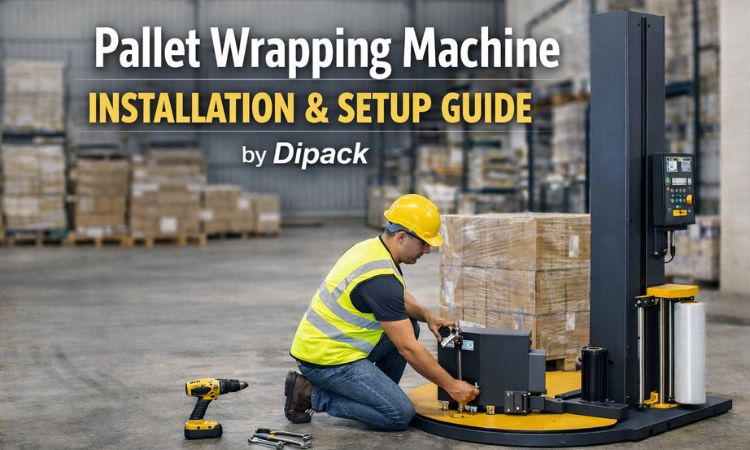
Pallet Wrapping Machine Installation and Setup Guide by Dipack
Pallet wrapping machine installation is quick and straightforward when you prepare the site, follow the steps in order, and test the machine before production. Most turntable machines can be installed in about 1 to 3 hours. This guide walks you through the full process: tools, floor preparation, mounting, electrical connection, film loading, settings, and the first test run. What is a Pallet Wrapping Machine and Why Proper Setup Matters A pallet wrapping machine rotates the pallet (or, in some models, the film arm) while applying stretch film evenly around the load. This keeps goods tight and secure during handling and transportation. Compared with manual wrapping, an automatic pallet wrapper saves time, cuts labor, and gives the same wrapping quality on every pallet. A correct setup is what makes those benefits real. It: Keeps the machine stable and reduces vibration. Lets the turntable rotate smoothly and quietly. Improves film usage and reduces waste. Protects operators from electrical and moving-part hazards. Prevents early wear on the motor, bearings, and drive parts. A poorly installed machine causes uneven wrapping, film tearing, and unexpected stops. In short, good pallet wrapping machine installation protects your machine, your operators, and your loads. Proper installation and setup are very important because they help: Proper installation and setup are very important because it helps to maintain the machine’s stability. By proper installation and setup, we ensure that the spinning platform is rotating smoothly. It also helps to improve film usage and to use the film very efficiently. By proper installation and setup, the safety of operators increases. Proper installation and setup are very important because if the machine is not installed correctly, then it may lead to uneven wrapping or operation issues, and a well-installed pallet wrapping machine improves productivity and helps in managing packaging operations more efficiently. Tools and Requirements Before You Begin Installation Before the installation process begins for the pallet wrapping machine, it is important to prepare the required tools for installation and also ensure the requirements of installation, such as whether the area where the pallet wrapping machine is to be installed is ready or not. Basic Tools Required for Installation For the installation of pallet wrapping machines, people have a wrench or spanner set. The tool required for the installation of the pallet wrapping machine is screwdrivers. Allen keys are also important for the installation of pallet wrapping machines. For the installation of a pallet wrapping machine, measuring tape is required. A spirit level for proper alignment is also needed for installation. Basic Tools Required for Installation For the installation of a pallet wrapping machine, a flat and stable floor surface is required. Enough working space is required around the pallet stretch wrapper for installation of the wrapping machine. A proper electrical power supply is also required for the installation of pallet wrapping machines. Safety equipment, such as gloves, is the most important requirement for the installation of wrapping machines. A stable surface ensures that the industrial packaging machine works very easily without any vibration or imbalance, and tools should be prepared before the installation, because it makes the installation process quick and more convenient. Step-by-Step Installation Process for Your Pallet Wrapping Machine Step 1 – Unboxing and Inspecting the Machine In the first step, operators carefully unbox the machine and remove the protective packaging from the machine, and they also ensure that all parts of the machine are available without any damage. Operators should check the following parts: Turntable base. Vertical mast. Film carriage. Control panel. Electrical wiring. Operators inspect every part to make sure that there is no damage caused during shipping, and if any parts look damaged, then contact the supplier before installing the machine. From this inspection, people can prevent future problems. Step 2 – Positioning and Floor Mounting In the second step, place the machine in the location selected for installing the machine because the correct placement of the machine helps in operating safely and efficiently. The area should have: A flat concrete floor. Enough space for pallet movement. Proper clearance around the machine. To check that the machine is perfectly placed and balanced, people have to use a spirit level, and if it is not properly balanced, then they use the anchor bolts to attach the machine to the floor because proper positioning of the machine ensures that the machine rotates smoothly and prevents unnecessary vibration while working. Step 3 – Electrical Connection and Power Setup After placing the pallet wrapping machine in its location, connect the machine to the power supply. Follow these safety guidelines: Use the recommended voltage mentioned in the user manual. Ensure proper grounding or earthing. Avoid loose or uncovered electrical wires. People always have to call the qualified technician to give the power supply to the machine because correct electrical setups ensure that the pallet wrapping machine works safely and protects the machine from losing power supply and getting damaged. Step 4 – Loading the Stretch Film Roll After connecting the machine to the power supply, the next step is loading the stretched film roll into the machine. Follow these steps for loading the stretch film roll: Open the film carriage holder. Insert the stretch film roll correctly. Pass the film through the guide rollers. Pull the film and attach it to the pallet. Using a good quality of stretch film can improve the wrapping strength and keep the pallet load secure, and most stretch wrapping machines support different types of film thickness depending on their packaging needs. Step 5 – Configuring the Control Panel Settings The next step after loading a stretch film roll is adjusting the control panel settings, which means that the modern machine comes with a user-friendly control panel that allows operators to adjust the various settings according to their needs. Common settings include: The platform rotation speed. The film’s tension level. The number of top and bottom wraps. The carriage movement speed. Adjusting these settings correctly helps people to achieve consistent wrapping results and take the best
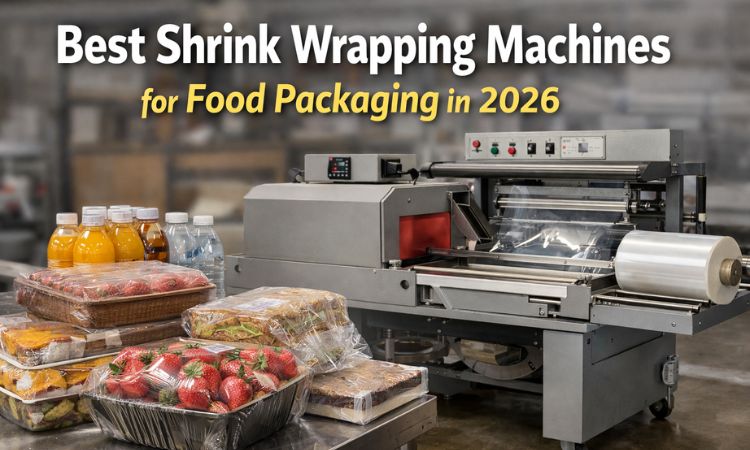
Best Shrink Wrapping Machines for Food Packaging in 2026
Today, when we go into any supermarket, we see food shelves stocked with snacks, bakery items, frozen meals, bottled drinks, and even fresh vegetables, neatly wrapped in plastic film. A shrink-wrapping machine usually does clean, tight packaging. Food packaging has one main job to do, which is to protect the product until it reaches the consumer, but today, packaging does many more things beyond protecting the food, such as maintaining the freshness of food, preventing it from contamination, improving self appeal, and increasing brand trust towards the customer. Those companies that manufacture food packaging are also very efficient for them because production moves very fast in food manufacturing industries, and manual wrapping does not match the production speed. That’s why many businesses rely on a shrink-wrapping machine to handle packaging quickly and consistently. In 2026, food companies are investing in smarter packaging equipment because modern shrink wrapping machines can wrap hundreds or even thousands of products in an hour and keep packaging in a neat and secure way. What Is a Shrink Wrapping Machine? A shrink wrapping machine is a packaging device that wraps products with a plastic film and then applies heat so that the film shrinks tightly around the product, from dust, moisture, and external damage, and it also keeps the product clean and safe. Shrink wrapping is widely and frequently used in the food packaging industry because it keeps products safe while also making the product look attractive on store shelves, from which customers are attracted and buy the product. How Does a Shrink Wrapping Machine Work? Shrink wrapping works through a simple and efficient process. First, the product is placed inside a shrink film, usually made from materials such as PVC or POF. The shrink wrapping machine then seals the film around the product. After sealing, the packaged product moves through a heat source or shrink tunnel. The heat causes the film to shrink tightly around the product. Within a few seconds, the packaging becomes firm, smooth, and secure. This fast process allows food manufacturing industries to package large volumes of products efficiently without slowing down production. Key Components of a Shrink Wrapping Machine In shrink wrapping machines, several key parts are included on which it works, and these components or parts allow the shrink wrapping machine to produce consistent packaging across different types of products:- Sealing system:- In this system, films are cut and sealed around the product. Moving belt or conveyor system:- In this system, products move through the machine very easily. Control panel:-The control panel helps operators to adjust the speed, temperature, and sealing settings 4. Heating system:- In the heating system, wrapped film around the product comes in contact with the heat, by which the film shrinks evenly around the package. Benefits of Using a Shrink Wrapping Machine for Food Packaging Extended Shelf Life & Freshness Food products come in contact with air moisture, which can get contaminated very easily. That’s why people have to use a shrink wrapping machine, by which the products get tightly sealed, reducing exposure to external elements, and from this freshness of food is maintained, and also extends the shelf life of food. Tamper-Proof & Hygienic Packaging Shrink packaging creates a barrier around the products, which prevents contamination during storage and transportation, and if the packaging is opened or damaged, it becomes immediately visible to the consumer. Cost-Effective Packaging Solution Shrink wrapping is very cost-effective as compared to manual packaging methods because shrink wrapping saves time and labor costs, and it also uses packaging film very efficiently without wasting material while maintaining strong product protection. Improved Product Presentation A neatly wrapped package makes food products look clean, professional, and ready for retail shelves because consumers often judge products by their appearance. Types of Shrink Wrapping Machines Used for Food Packaging L-Bar Sealer Shrink Wrapping Machine The L- bar sealer is one of the most common types of shrink wrapping machine which is used for small to medium businesses, and it seals the shrink film around the product in an L-shape. This type of machine is good for bakery items, snack boxes, and small packaged foods. Sleeve Wrapper Shrink Wrapping Machine A sleeve wrapper is used for packaging multiple products together instead of wrapping each product one by one and this type of shrink wrapping machine is used for bottled drinks, canned foods, and multipack products. Automatic Shrink Wrapping Machine In automated shrink wrapping machines, the entire packaging process is done by a machine; there is no involvement of human beings for packaging, and these machines are used by huge food manufacturers with high packaging demand. Semi-Automatic Shrink Wrapping Machine A semi-automatic shrink wrapping machine requires the help of some operators but still it is more efficient and faster than the manual methods and this type of machines are used by small businesses. Tunnel Shrink Wrapping Machine The tunnel shrink wrapping machine is a heating chamber where the film shrinks and closely tight around the product. These types of packaging systems are widely used in good packaging. How to Choose the Best Shrink Wrapping Machine for Your Food Business Production Speed & Capacity First, consider how many products your business needs to package every hour. High production facilities need faster machines, while smaller businesses may prefer compact equipment. Type of Food Product Being Packaged Different food items require different packaging styles. Soft bakery items, frozen meals, or beverage bottles may need different machine configurations. Film Compatibility (PVC vs POF) Shrink film type matters. PVC film is often used for general packaging, while POF film is considered safer for food packaging because it produces fewer harmful fumes. Machine Footprint & Space Requirements Some food factories have limited space. Before installing a shrink wrapping machine, it is important to check how much space the equipment requires on the production floor. Budget & After-Sales Support Finally, consider the cost of the machine and the support offered by the manufacturer. Good after-sales service ensures your shrink wrapping machine keeps running smoothly.
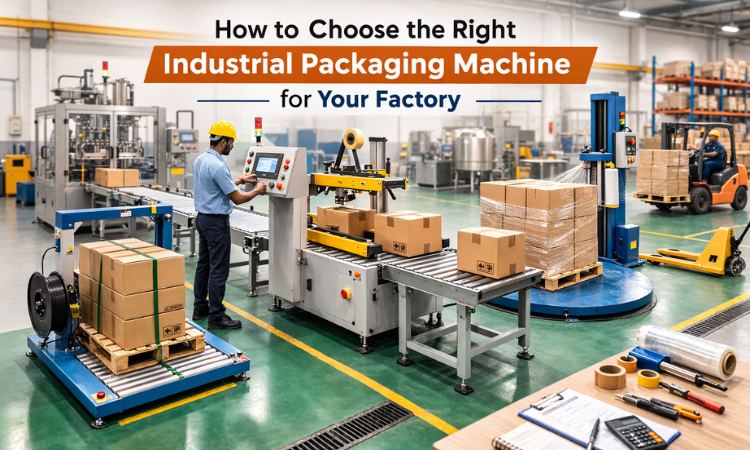
How to Choose the Right Industrial Packaging Machine for Your Factory
Your packaging line is a lot more than spending money; this is actually a super silent salesperson and also the very first line of defense. An incorrect industrial packaging machine can easily drain profits with wasted materials, production bottlenecks, and even worse, damaged goods. Multiple factories make these types of costly mistakes: buying those cheap machines that have a high rate of frequent breakdowns, choosing systems that can easily handle humidity, or also sometimes overinvesting towards automation for small batches. This guide is designed to cut through all the useless noise with the best and most factory-floor-focused approach for the selection of the right packaging equipment that can easily work for your business and not someone else’s brochure. Understanding Your Factory’s Packaging Requirements Type of Product You Manufacture The physical nature of your products dictates a lot in this case. Fragile electronics require gentle carton sealers that have adjustable tension, whereas the steel coils demand actual heavy-duty industrial packaging solutions with 500+ packaging capacity. Liquids require leakproof sealing systems, and powders that need dust-tight enclosures, along with the enclosures, call for stretch-wrapping flexibility. Ignoring the mismatch can cause around 68% of the packaging failures; we have seen multiple snack factories that use shrink wrappers meant for bottles, thus crushing their products daily. Packaging Format & Material Used Matching these machines to the actual packaging materials: Corrugated Cartons? : The case erectors that have adjustable width settings. Palletized Goods? : Stretch wrapping machines that film with pre-stretch. Bottle/Cans: Shrunk tunnels that are compatible with POF film. Bulk Sacks: Automatic strapping systems that are woven for PP bags Using the compatible materials (for instance, cheap PVC for high-humidity factories) that cause 30% more jams and waste. Daily Production Volume & Speed Needs Just do not guess but measure: <50 units/hour: Semi-automatic machines can suffice (for instance, tabletop strappers). From 50 to 200 units per hour: Mid-sized automatic systems (for instance, L-Sealers) 200+ Units Per Hour: For fully integrated lines for the conveyor sync. Pro tip: Add 25% of the buffer capacity. A Pune-based spice exporter that learned this the hard way when Diwali orders overwhelmed their “perfectly sized” shrink wrapper. How to Choose the Right Industrial Packaging Machine Match Machine Capacity with Factory Output The ₹25 Lakhs speed strapping machine can be useless if you can run for around 8 straps per minute. Calculate the (Units per shift) ÷ (Shift hours) = Required speed. For instance: 1,200 cartons per 8-hour shift = 150 Cartons per hour, thus needing a sealer handling for ≥2.5 cartons/minute. Focus on Long-Term Efficiency, Not Just Price At ₹4 Lakhs, a semi-auto strapper seems cheaper than around ₹10 Lakhs for automatic systems, as you calculate: Labor: Manual strapping needs 2 operators. For ₹40,000/month vs. 1 for the auto systems (₹20,000). Waste: Auto systems that use 30% less strap film. Downtime: Cheaper machines can break easily for 3X more time and cost around ₹18000 per hour for halted productions. Consider Scalability for Future Growth Choose those modular machines: Expandable turntables that can add film carriages later. PLC-controlled systems towards accepting new sensors through software updates. Conveyor-ready designs: For the future line integration A textile mill in Coimbatore saved around ₹6 Lakhs by upgrading their industrial packaging machine instead of replacing it when volumes doubled. Different Types of Industrial Packaging Machines Explained There are the best industrial packaging solutions that can transform your packaging needs. Strapping Machines Best For: Securing irregular or heavy loads (appliances, lumber, and steel). Indian Use Case: An auto part supplier in Ahmedabad used PET strapping machines for bundling of engine blocks. Major Tip: For those damp or monsoon places, specify the stainless steel tensioners for preventing rust jams. Stretch Wrapping Machines Great for pallet stabilization for logistics. Indian Use Case: E-commerce fulfillment centers can wrap around 40+ SKU pallets every hour with the rotating-arm packaging machines in India. Major Tip: For dusty factories, use the right industrial packaging machine that’s IP-54 rated. Shrink Wrapping Machines Great for: Retail-ready packaging (cosmetics, beverages) Indian Use Case: With the use of L-bar sealers, FMCG can easily seal 6-pack beverages, thus achieving around 98% tamper-proof seals for compliance in supermarkets and hypermarkets. Major Tip: For different power fluctuations, add voltage stabilizers for the heat tunnels. Carton Sealing & Forming Machines Great for: Uniform box sealing for e-commerce/pharma Indian Use Case: A Delhi-based supplement maker reduced the sealing errors from around 12% to around 0.5% after installing the automatic case detectors. Major Tip: Choose quick-charge parts for handling sudden SKU switches. Choosing the Right Automation Level Type Best For Speed Labor Needed Price (India) Manual <50 units per day 5 to 10 units/min 2 operators ₹1 to ₹3 lakhs Semi-Automatic 50-200 units per day 10 to 25 units/min 1 operator ₹3 to ₹8 lakhs Fully Automatic 200+ units per day 25 to 60 units/min 0.5 operator ₹8 to ₹25+ lakhs Indian Reality: Fully automatic packaging machines in India can save up to ₹1.2 lakhs per month in labor and film costs, but they require stable power and skilled maintenance. Machine Quality, Build & Compliance Standards Build Quality for Indian Conditions Motors rated for high temperatures (45°C+) IP54+ dust-protected enclosures Voltage tolerance between 180V–240V These features ensure reliable performance across different regions. Safety & Compliance BIS certification for electrical safety CE marking for export-oriented businesses Emergency stop buttons within easy operator reach Safety compliance is non-negotiable when investing in packaging machines in India. After-Sales Support & Service Availability Installation & Operator Training On-site installation by factory-trained engineers Operator training in local language 30-day performance guarantee Spare Parts & Service Support Keep critical spares in stock Ensure technician availability within 24 hours AMC contracts covering wear and tear Reliable service is part of total industrial packaging solutions. Cost vs Value: Calculating ROI The Real Cost Equation Total Cost = (Machine Price) + (Labor × 12 months) + (Film/Waste × 12 months) + (Downtime Losses) Basic calculation for a ₹10-lakh stretch wrapper: Labor Savings: ₹40,000 per month × 12 = ₹4.8L Film
Packaging Automation Solutions for Manufacturing Units in Ludhiana
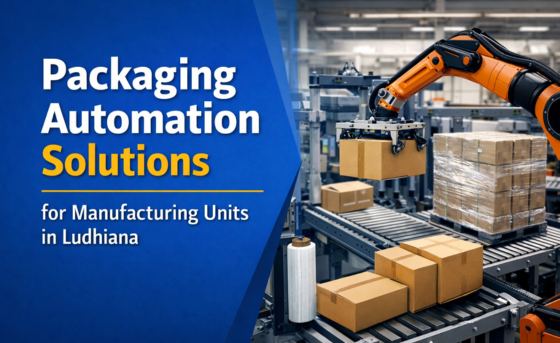
Ludhiana is known as one of India’s strongest manufacturing cities, where goods such as textiles, bicycle parts, engineering products, and FMCG items are manufactured. Factories in Ludhiana run at a fast pace every day, and as manufacturing production increases, packaging of these goods is becoming a serious challenge for manufacturing industries. Manual packaging methods are a very slow process and are heavily dependent on workers. Because of this, they frequently create delays in delivery. To tackle this problem, many factories are now looking at packaging automation solutions in Ludhiana. In today’s competitive market, automation is not a luxury; it is becoming a practical need for manufacturers who want consistent output and smooth production. This blog provides complete information about packaging automation. What Is Packaging Automation? Covering manufactured goods with a protective cover using machines is known as packaging automation. In this method of packaging, machines are used instead of labour for packing products. In manual packaging, workers pack, seal, label, and stack products by hand, and in this process, the chances of making mistakes increase. Automated packaging uses machines to handle these tasks. These machines can fill, wrap, seal, strap, label, and palletize products with consistent speed and quality. In modern factories, industrial packaging machines work as part of the production line, reducing human effort and helping factories deliver products on time. Packaging automation also plays an important role in timely delivery. When packaging is automated, production increases and becomes easier to control. Packaging Challenges Faced by Manufacturing Units Manufacturing industries regularly face packaging problems because they mostly depend on labour. It is very hard to find skilled packaging labour, and it is expensive to sustain them. Due to regular labour absence, production output can be affected, which delays dispatching goods on time. Inconsistent output is another big challenge in packaging because manual packaging totally depends on workers’ skills and energy levels. Due to this, uneven packaging, damaged products, and regular customer complaints about loose packaging occur. There are always delays in dispatching goods because packaging is slow, even when production speed is high. As a result, manufactured products get accumulated near dispatch areas, causing space shortages and safety issues. These challenges push manufacturers to think seriously about factory automation packaging solutions. Types of Packaging Automation Systems Secondary Packaging Automation In this system, products that are already in primary packaging are packed into boxes, followed by box sealing and labeling. Automation of this packaging process improves consistency and minimizes repetitive work. End-of-Line Systems End-of-line packaging systems are installed at the final stage of production. These systems include stretch wrappers, strapping machines, case packers, and palletizers. They prepare goods for storage and dispatch and are critical for factories with high delivery volumes. Integrated Wrapping and Strapping Integrated wrapping and strapping systems secure products during transportation and save a lot of time and space. These systems are commonly used in textile and engineering units in Ludhiana. Benefits of Packaging Automation for Ludhiana Manufacturers Packaging automation increases productivity, as machines work continuously without fatigue. Manufacturers achieve higher output using the same resources, while also saving time. Automated packaging machines provide consistent productivity. They reduce product damage, minimize incorrect labeling, and lower packaging defects. Packaging automation also offers scalability. When market demand increases, automated systems allow manufacturers to increase output without adding large labour teams. This helps industries meet sudden market demand efficiently. In the long run, packaging automation solutions in Ludhiana help factories remain competitive and reliable. Industries in Ludhiana Adopting Automation In Ludhiana, industries are gradually adopting packaging automation. Textile industries are starting to use automated wrapping and strapping to manage textile materials and garments safely. Fast-moving consumer goods facilities rely on automated packaging for speed and hygiene, as consistent packaging is essential for maintaining brand image in this sector. Manufacturing industries producing engineering goods use heavy-duty industrial packaging machines to pack metal parts, tools, and large machine components for secure transportation. Across these sectors, automation is becoming a standard practice rather than an experiment. How Dipack Helps with Packaging Automation Dipack works closely with manufacturing units to design practical automation solutions. It focuses on understanding the factory’s real problems instead of selling machines blindly. The solution design approach begins with studying production flow, packaging volume, and space constraints. Based on this analysis, suitable automation systems are recommended. Dipack also provides support across Punjab and NCR, including installation, training, and after-sales service. Local support is important because packaging systems are critical for daily operations. For more details, manufacturers can explore the internal resource on packaging automation services and review the guide on end-of-line packaging systems to understand system options better. Factors to Consider Before Automating Packaging Production volume is very important when automating packaging, as automation works best when output is stable or growing. Very low-volume units do not show immediate returns. Factory layout should also be considered. Space availability and material flow affect machine selection and placement. Future expansion must be planned in advance. Automation systems should allow upgrades as production grows, helping avoid costly changes later. Making informed decisions ensures that automation delivers real value. Conclusion Packaging automation is no longer optional for manufacturing units in Ludhiana. Rising labour challenges, quality demands, and delivery pressure make automation a smart move. By using automated packaging methods, factories can improve productivity, reduce errors, and prepare for future growth. Companies like Dipack help manufacturers build efficient, future-ready packaging systems that support business growth and provide long-term operational stability.
Stretch Wrapping Machines for Warehouses & Manufacturers in Delhi NCR
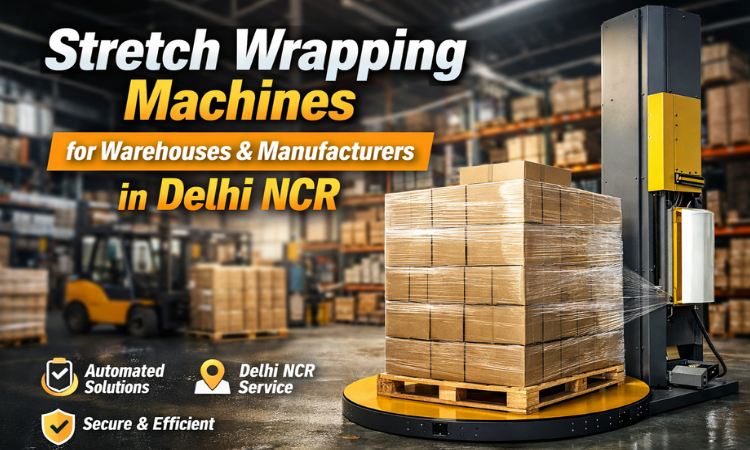
Delhi NCR habitat that includes Delhi, Noida, Gurgaon, and Faridabad has witnessed remarkable development in terms of warehouse space and areas earmarked for industry and manufacture in recent years, especially after a rise in distribution centers of FMCG goods, automobile industry components, e-commerce fulfillment centers, and export-oriented industry sectors. Perhaps the most critical aspect that should not be neglected in the process of providing the best warehouse packaging solution is the secure palletizing process. For the operations manager or someone looking to purchase the best stretch wrapping machine in Delhi NCR, the automated stretch wrapping process is replacing the conventional manual wrapping process on pallets. What Is Stretch Wrapping and Why Is It Important? Stretch wrapping can be defined as a process where palletized products to be transported are wrapped securely using stretch film during storage and transit.” The pallet wrapping process employs a pallet wrapping machine to attain consistent levels of wrapping tensions in order to ensure load control in different pallet sizes and weights. The Need for Stretch Wrapping in Operational Processes Improves pallet stability Stretch film binds cartons and products together, preventing movement during forklift handling and transit. Protects goods during transportation Proper wrapping safeguards products from dust, moisture, and external impact. Enhances workplace safety Stable pallets reduce the risk of collapse, accidents, and product spillage. Ensures consistent packaging quality Operational Challenges Without Automated Wrapping Load shifting during transit Manual wrapping may lead to inconsistency and cause pallets to come loose during long-distance transportation. Product Damage & Return Poor handling of the customer load results in more breakages. High Labor Dependency For manual wrapping, more manpower is required. Inconsistent wrapping quality These workers have different levels of tension. Slower dispatch cycles Similarly, manual processes also affect the whole throughput in a busy warehouse. Worker Fatigue and Safety Risks Repetitive actions like wrapping result in injuries as well as decreased productivity. Types of stretch wrapping machines Semi-Automatic Stretch Wrapper Particularly good for a medium volume warehouse, where picking and loading pallets is manual, and the machine is used for wrapping. Automatic Stretch Wrapper Systems Suited to high throughput facilities with conveyor belt incorporation. Turntable Pallet Wrapping Widely used for manufacturing units of standard size with stable pallets. Rotary Arm Stretch Wrappers For unstable or lightweight products that demand pallets that are stationary. Online Stretch Wrapping Lines Used in the design of an automated warehouse packaging system. Customized Industrial Configurations Customized arrangements based on load height, weight, and floor plan. Benefits of Stretch Wrapping for Delhi NCR Industries Industries functioning in Noida, Gurgaon, Faridabad, and Delhi gain a huge impetus from pallet packaging automation services. Faster packaging cycles Wrapping time per pallet decreases in machines. Reduced transit losses With a better load stability level, fewer damage claims Uniform quality of wrapping This consistent tension provides assured pallet security. Lower labor dependency There is reduced manual work, and therefore a lesser requirement for staffing. Scalability for growth Automatic “stretch wrappers” can accommodate growing requirements. Improved operational efficiency Smooth pallet handling through the storage/ despatch areas. Industries where the application of Stretch Wrapping is employed in Delhi NCR Stretch wrapping machines are increasingly being used across various sectors in the NCR region. FMCG Warehouses in Noida & Delhi High speed dispatch and retail distribution. Manufacturing units at Farid Heavy components and finished goods packaging. Logistics Hubs in Gurga Multi-client pallet handling and consolidation. Pharmaceutical distribution centers Secure, uncorrupted packaging arrangements. Automative Suppliers Damage-free movement of parts and assemblies. Export-Oriented units Compliance with global shipping regulations. Dipack’s Role in Stretch Wrapping Solutions Dipack would not wish to present generic equipment but, rather, machinery for packaging that corresponds to actual industrial usage. Dipack’s Approach to Stretch Wrapping Industry-specific selection of machines Solutions based on the nature of the load and operational flow. Local installation support On-ground teams across Delhi NCR. Operator training and handover Smooth adoption on the shop floor is ensured. Integration with existing packaging lines Compatibility with conveyors and palletizers. After-sales technical assistance How to Choose the Appropriate Stretch Wrapping Machine The choice of appropriate stretch wrapping machines in Delhi NCR is not based on ‘one-size-fits-all’ but rather on the operational requirement for a particular production cycle. 6 Steps to Choose the Right Machine Step 1: Analyze the type of load Assess pallet weight, height and stability. Step 2: Analyze Daily Throughput Determine pallets per shift or per hour. Step 3: Review Floor Space Availability Match machine footprint with warehouse layout. Step 4: Determine Automation Level Continue with semi-automatic or full-automatic stretch wrapper systems. Step 5: Consider Integration Needs Check the compatibility with conveyors or forklifts. Step 6: Plan for Future Expansion Choose scalable equipment that will support growth by: Conclusion As the need for scaling up the existing supply chain in Delhi, Noida, Gurgaon, and Faridabad increases, the need to ensure pallet protection becomes obvious. A stretching wrapping machine provides stability and protects goods against damage. The way Dipack does business and supports the industries they serve also helps to create a robust supply chain for their customers in North America.
Packaging Automation Trends in India: The Rise of Shrink & Stretch Wrapping
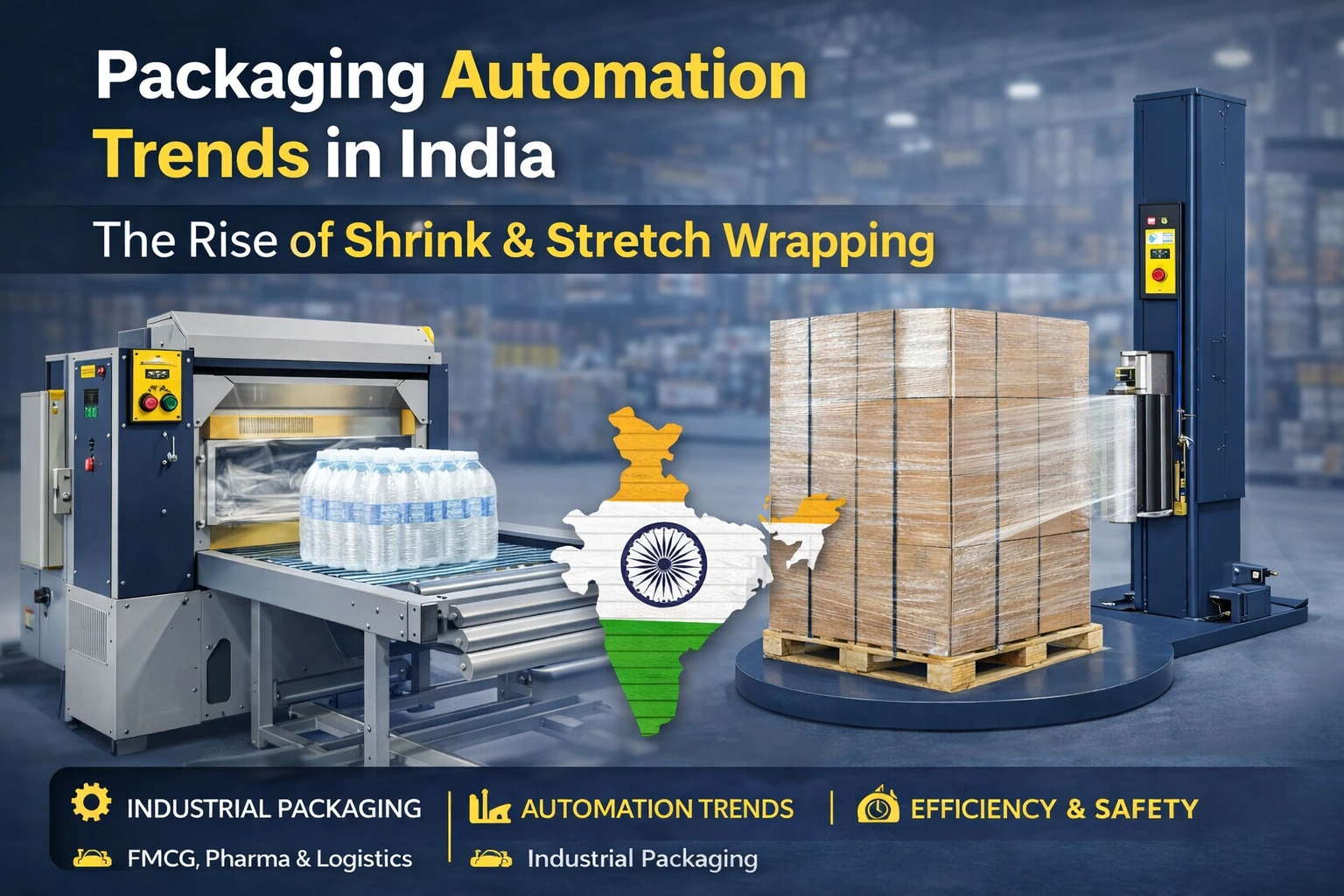
E-commerce and manufacturing are booming at a high rate in India. This was never seen before in this country. The online sales have jumped by around 34% in just the last year, and factories are operating at maximum capacity to churn out goods and deliver them to the customers fast. But one challenge still remains unsolved: the challenge of packaging goods, and that too in a cheaper, reliable, and faster way. This is the new move towards packaging automation in India, where the goods move from the production line to the doorsteps of the consumer fast and in a reliable way. The modern revolution in quick and efficient industrial packaging solutions has been taken by stretch and shrink wrapping machines, and these machines have become an important tool for Indian industries. These systems are not just designed for fast packaging; they ensure that product is packaged safely, cut packaging costs, and reduce waste in packaging as well, and thus the product gets delivered intact. As the customer expectations are growing and costs of labor rising, understanding these technologies is not just an option—this is business survival. What is Packaging Automation? Packaging automation directly means that you are using machines and software towards handling packaging that was previously done by hand. This covers everything, from filling containers to sealing boxes, along with wrapping pallets as well. For all the Indian manufacturers, this level of technology gain can provide multiple benefits towards packaging automation in India: Speed: Automatic systems can easily work 24X7 without taking breaks and processing hundreds of units each hour. Accuracy: No more inconsistent wrapping or misaligned seals—each packaging can meet quality standards. Labor Reduction: For the skilled workers that are in short supply, automation can fill the gap while reducing any kind of payroll costs by up to 40%. Types of Automated Packaging Machines While multiple packaging machines are there, four stand out for Indian businesses: Shrink Wrap Machine The shrink wrap machine system uses heat to tightly tighten the plastic film at the bottom of your machine, thus creating the shiny and professional finish you might see on multipacks of cosmetics or beverages. Stretch wrapping machines in India The system of stretch wrapping machines does specialize towards securing palletized goods for the elastic film. This is great for warehouses that are shipping goods across the country. Carton Packaging Machines The carton packaging machines in an automatic manner form, fill, and also seal cardboard boxes at speeds that are impossible for manual workers. Case Sealers The case sealers provide for tamper-evident and consistent closures that can be used for everything from foods to pharmaceuticals. Growth of Packaging Automation in India Market Drivers Three forces are accelerating adoption: E-commerce explosion: With e-commerce platforms like Flipkart, Myntra, and Meesho processing millions of orders every day, automated packaging thus ensures that fragile items survive India’s delivery routes. Pharma & FMCG Growth: Brands like Cipla, Mankind, Dabur, or Patanjali need constant and sterile packaging for protecting product integrity and meeting regulatory standards. Make in India Push: Government schemes encourage factories towards modernization and packaging automation, going high into the modernization lists. Benefits for Indian Manufacturers Local businesses thus report a greater level of improvements when automation is applied: Labor Costs Down by 35% One stretch wrapping machine can replace around three manual wrappers. Production cycles 50% faster Shrink-wrapping machines can handle up to 120 packs per minute versus 30 for manual labor. Quality Consistency With the quality consistency, no more weak spots that cause 20% of the transit damage claims. For all the Indian manufacturers that are competing on a global level, these gains create a difference between loss and profit. Shrink Wrapping Machines in Packaging Automation Shrink wrapping involves wrapping products in loose plastic film, then applying heat to shrink it tightly around them. In India, these shrink-wrapping machine systems are revolutionizing how brands can present their products. FMCG giants use them for pharma companies, beverage multipacks, and small e-commerce companies’ sellers for premium unboxing experiences. For visual appeal matters, shrink-wrapped products account for 18% of the shelf sales in industry reports. Benefits of Shrink Wrapping Automation Automated shrink wrapping can deliver the three major advantages: Cost Savings: Machines that use around 30% can lessen the need for manual methods while wrapping these twice as fast. Product Protection: Seals that are tamper-evident can prevent contamination and theft—important for medicine and food. Consistent Quality: Each package looks professional, thus building trust for the consumers. Popular Applications in India These sectors have led the shrink-wrapping adoption: FMCG: Beverage companies can easily bundle bottles together for retail displays. Pharmaceuticals: Sterile packaging can protect medicines from tampering or moisture. E-commerce: Sellers can use mini-shrink systems for the creation of premium unboxing experiences for those high-value items. Stretch Wrapping Machines in Packaging Automation These stretch wrapping machines systems for securing pallets using elastic pallets for any heat. A turntable or the rotating arm can apply tension with controlled wrapping and automatic adjustment of film per load per size, slashing the material costs for ensuring 40% of the transit-safe packaging for e-commerce and warehouse fulfillment centers. Industries Using Stretch Wrapping in India Three sectors use this packaging automation in India: Warehousing & logistics: Each major 3PL provider can use stretch wrappers for securing goods for nationwide transport. Food & Beverage: Companies do use wrap pallets for canned goods or bottled water to prevent shifts due to monsoon shopping and shipping. Manufacturing & Export: Factories are preparing goods that will be transported across the globe and use stretch wrapping machines for securing goods for transit damage. Emerging Trends in Packaging Automation For innovations and reshaping the landscape: Smart Machines: These are IoT-enabled systems that can predict maintenance needs and further optimize film usage. Sustainable Solutions: Recyclable films and energy-efficient motors can help brands meet ESG goals. Customized Automation: Any type of modular design can adapt for varied product sizes without any kind of costly retooling. How to Choose the Best Industrial Packaging Solutions Selection of the best systems