
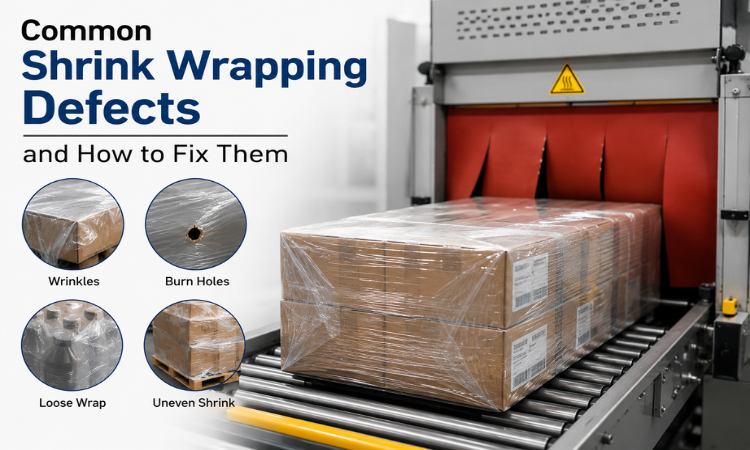
For industrial packaging, highly consistent packaging is important, especially when doing shrink wrapping. Even some basic shrink wrapping defects can be a source of getting the product damaged, wasted packaging materials and angry customer complaints along with high cost downtimes. But there’s good news, most of these issues can be prevented. For optimizing your shrink wrapping machine settings, going with the right type of shrink film plus following some basic operating practices, you can easily get great packaging every time. In this guide, we will help you learn on how to understand some common shrink wrapping problems, and get to their cause, and then apply the most effective fixes that will help in keeping your production line running efficiently and smoothly.
What Are Shrink Wrapping Defects?
The shrink wrapping defects are those visible flaws or those structural failures for packaging that will create issues in terms of product safety, stability and appearance. These shrink film defects occur when there’s a mismatch between the heat of the machine, tension or speed and the physical properties of the product or film itself. Some factors as in wrong temperatures, irregular product shapes, poor quality films and even humidity in the warehouse can create these issues. Some of these common defects you will understand to troubleshoot are burn holes, wrinkles, loose wrapping, uneven wrapping plus weak seals. Mastering these shrink wrapping troubleshooting starts by knowing exactly what to look for.
Quick Diagnostic Table for Common Shrink Wrapping Defects
| Defect | Most Likely Cause | Quick Fix |
|---|---|---|
| Wrinkles | Slow conveyor speed or low heat | Increase tunnel temperature slightly |
| Burn Holes | Excessive heat in the shrink tunnel | Lower the tunnel temperature |
| Loose/Baggy Wrap | Incorrect film type or insufficient heat | Use a higher-shrink film and increase heat |
| Uneven Shrinking | Blocked airflow or uneven heat distribution | Check heating elements and tunnel fans |
| Film Tearing | Sharp product edges or excessive film tension | Use thicker film or add corner protectors |
| Fish Eyes / Air Pockets | Trapped air or poor seal bar pressure | Adjust product placement and seal bar pressure |
| Split Seals | Dirty sealing surface or seal bar too cool | Increase seal bar temperature and clean the seal bar |
| Weak/Incomplete Seals | Moisture on the film or low sealing pressure | Store film in a dry place and increase sealing pressure |
| Product Distortion | Excessive heat for heat-sensitive products | Reduce heat and increase conveyor speed |
| Cloudy/Dull Finish | Overheating the film beyond its tolerance | Reduce tunnel temperature |
10 Common Shrink Wrapping Defects and How to Fix Them
1. Wrinkles on the Shrink Film
Symptoms: Folded lines, loose or it ceases for the package.
Root Cause: Slow conveyor or low heat towards preventing high tension.
Practical Solution: Increasing the tunnel temperature by 5% to 10% °C.
Prevention tip: Ensuring the correct machine speed or consistent product spacing.
2. Burn Holes in the Film
Symptoms: The small melted holes or those charred edges for the wrap.
Root Cause: Excess heat for the shrink tunnel.
Practical Solution: Lowering the tunnel temperature in an immediate manner.
Prevention Tip: Regular calibration of temperature sensors for avoiding accidental temperature.
3. Loose or Baggy Shrink Wrap
Symptoms: Film will not conform for the product shape.
Root cause: Using the film or inefficient heat for the low shrinkage.
Prevention Solution: Increasing heat or switching the high-shrinkage film.
Prevention tip: Always matching the film type for the specific product weight and shape.
4. Uneven Shrinking
Symptoms: One side for the package that’s tight, while that other is loose.
Root Cause: The uneven heat distribution for the blocked airflow towards the tunnel.
Prevention Solution: Check and realign the tunnel fans that’s clean plus the heating elements.
Prevention Tip: Scheduling heating inspections and scheduling regular airflow.
5. Film Tearing During Shrinking
Symptoms: Tears and rips in the film, usually for the sharp corners.
Root Causes: Excessive film tension or the sharp product edges.
Practical Solution: Use a thicker gauge for adding in cardboard corner protectors.
Prevention Tips: Inspecting products for the short edges before they can reach the wrapper.
6. Fish Eyes or Air Pockets
Symptoms: Small bubbles that are tapped through the film surface.
Root Cause: Improper seal pressure or trapping air during sealing.
Practical Solutions: Ensure perfect product placement or adjusting seal bar pressure.
Prevention Tip: Using a vacuum system sealing for those sensitive items.
7. Split Seals After Shrinking
Symptoms: The seal opens up or pops after it passes through tunnel.
Root Causes: Sealing surface dirty or seal bar temperature low.
Practical Solution: Increase temperature slightly and thoroughly clean the seal bar.
Prevention tip: Wipe the seal bar everyday for a heat-resistant & non-abrasive cloth.
8. Weak or Incomplete Seals
Symptoms: The seal can peel off easily for those visible gaps.
Root Cause: Low Temperature, low sealing pressure, moisture on film.
Practical solution: Increase in temperature or seal bar pressure.
Prevention Tips: Store the film rolls in a dry environment for prevention of moisture buildup.
9. Product Distortion Due to Heat
Symptoms: Plastic containers can deform/melt or cardboard boxes warp.
Root Causes: Heat sensitive items or extra heat exposure.
Practical Solutions: Increasing conveyor speed or lowering tunnel temperature.
Prevention tip: Simply run a small batch test for the heat-sensitive products initially.
10. Cloudy or Dull Film Finish
Symptoms: Film loses its transparent, glossy, that retail appearance.
Root Cause: Overheating film due to specific tolerance levels.
Practical solutions: Reduction in funnel temperature.
Prevention Tip: Just follow the recommended temperature guidelines correctly.
What Causes Most Shrink Wrapping Defects?
Instead of treating symptoms, it is important to understand that major root causes of shrink wrapping problems:
- Incorrect Heat tunnel temperature: Too cold that can cause loose wrap or too hot that can even cause burns.
- Wrong Conveyor Speed: Moving the product too slow can cause overheating or too fast can do improper shrinking.
- Poor Film Selection: Using the shrink percentage or wrong thickness for the specific products.
- Incorrect Machine Settings: Mismatched temperature, seal-bar pressure or timings.
- Low-quality shrink Films: Low quality shrink films do have poor shrink memory and inconsistent thickness.
- Improper Product Placement: Items that are placed very close with each other can restrict proper airflow.
- Lack of machine maintenance: Clogged tunnels or dirty seal bars can create issues in performance.
How to Prevent Shrink Wrapping Defects Before They Happen
Proactive shrink-wrapping troubleshooting can save both money and time. Prevent the issues by:
- Selection of the right shrink film for the right product shape and weight.
- Using the tunnel temperature by the manufacturer plus the conveyor speed.
- Inspection of cleaning of seal bar that’s daily for ensuring clean and strong seals.
- Performing the routine machine maintenance that includes the checking fans plus heating elements.
- Providing the right operating training for standard shrink wrapping machine settings.
- Do ensure the proper product spacing plus positioning for the conveyor belt.
- Do run the small batch test before the large-scale production.
Shrink Wrapping Quality Control Checklist
Using the quick checklist for each production thus ensuring the run for ensuring the flawless output:
- Film Condition: Rolls that should be stored in a temperature controlled area and should be undamaged.
- Temperature Settings: Tunnel temps or seal bar that can match the requirements.
- Seal Quality: Testing the seal peels cleanly without the surrounding or tearing films.
- Conveyor Alignment: Belt that is moving and centered for consistent and correct speed.
- Product Spacing: Adequate gaps between items towards the proper tunnel airflow.
- Film Tension: Adjustment correctly for avoiding bagginess or avoiding tearing.
- Cooling inspection: Packages are cool, firm and full set before handling.
Shrink Wrapping Quality Control Checklist
Using the quick checklist for each production thus ensuring the run for ensuring the flawless output:
- Film Condition: Rolls that should be stored in a temperature controlled area and should be undamaged.
- Temperature Settings: Tunnel temps or seal bar that can match the requirements.
- Seal Quality: Testing the seal peels cleanly without the surrounding or tearing films.
- Conveyor Alignment: Belt that is moving and centered for consistent and correct speed.
- Product Spacing: Adequate gaps between items towards the proper tunnel airflow.
- Film Tension: Adjustment correctly for avoiding bagginess or avoiding tearing.
- Cooling inspection: Packages are cool, firm and full set before handling.
When Is It Time to Upgrade Your Shrink Wrapping Machine?
Sometimes, the recurring defects that can indicate that the equipment for simply reaching the operational limits. This may be the time for upgrading the shrink wrapping machine for experiencing it:
- Unexplainable, frequent temperature fluctuations.
- Bad sealing quality consistency that has the correct settings.
- Increasing the film wastage for constant burning or constant tearing.
- Higher maintenance costs and frequency and unexpected downtime.
- Inconsistency in packaging quality for negativity that can affect the customer satisfaction.
The modern shrink wrapping machines that can provide digital controls, higher overall efficiency, superior heat distribution plus solving those legacy equipment in a permanent manner.
Conclusion
Most of the shrink-wrapping defects can be prevented easily. The key is towards flawless packaging that focuses on identification of the root cause rather than just treating those surface symptoms. By just committing to regular maintenance and selecting the correct shrink film, plus optimising the shrink wrapping machine settings, you can achieve great packaging quality, improved productivity and overall lowered operational costs. If the current setup is holding your back, this can be the right time to explore the shrink wrapping machines for future-proofing the packaging time, thus ensuring that each product ships perfectly.